
Bayes' rule
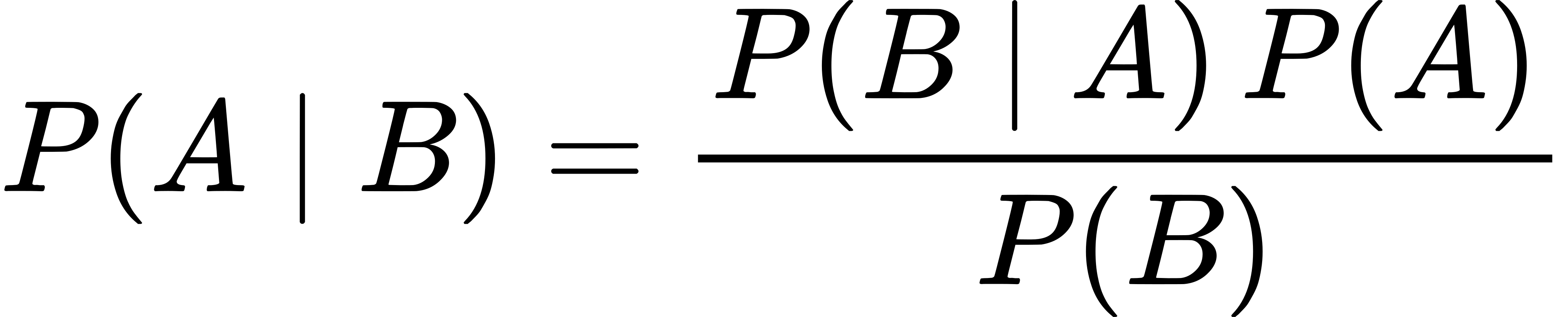
Weigh a belief by how likely the evidence is if it were true.
How we think
Every equation on this site and what it means, because marketing is a decision made under uncertainty.
From David Sumpter's The Ten Equations That Rule the World, which is where this habit started.
Weigh a belief by how likely the evidence is if it were true.

How two attributes move together across people. It says nothing about why.

Win probability as a function of the odds, with fitted parameters alpha and beta.

After n trials with mean h and spread sigma each, the 95 percent range for the total.

The steady state of influence is fixed by the structure of the network, not by any one node.

A price or metric moves with a signal h, feedback f of its own level, and noise.

An exponentially weighted memory of rewards. Short-term wins can mislead it.
What we reach for when the question is where to spend, what to test, and what a result is worth.
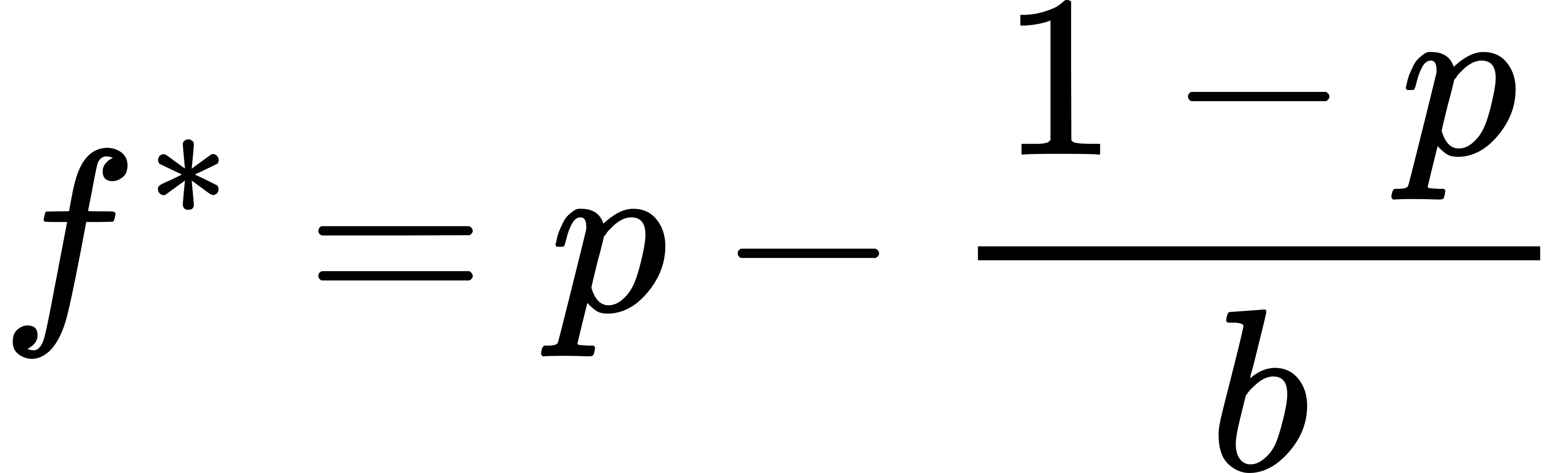
The share of your bankroll to stake on a bet that pays b to 1 and wins with probability p, so it grows fastest over many bets.

Advertising carries over, then saturates. The core of marketing mix modelling.

After s successes and f failures, the whole distribution of the rate rather than a point estimate.
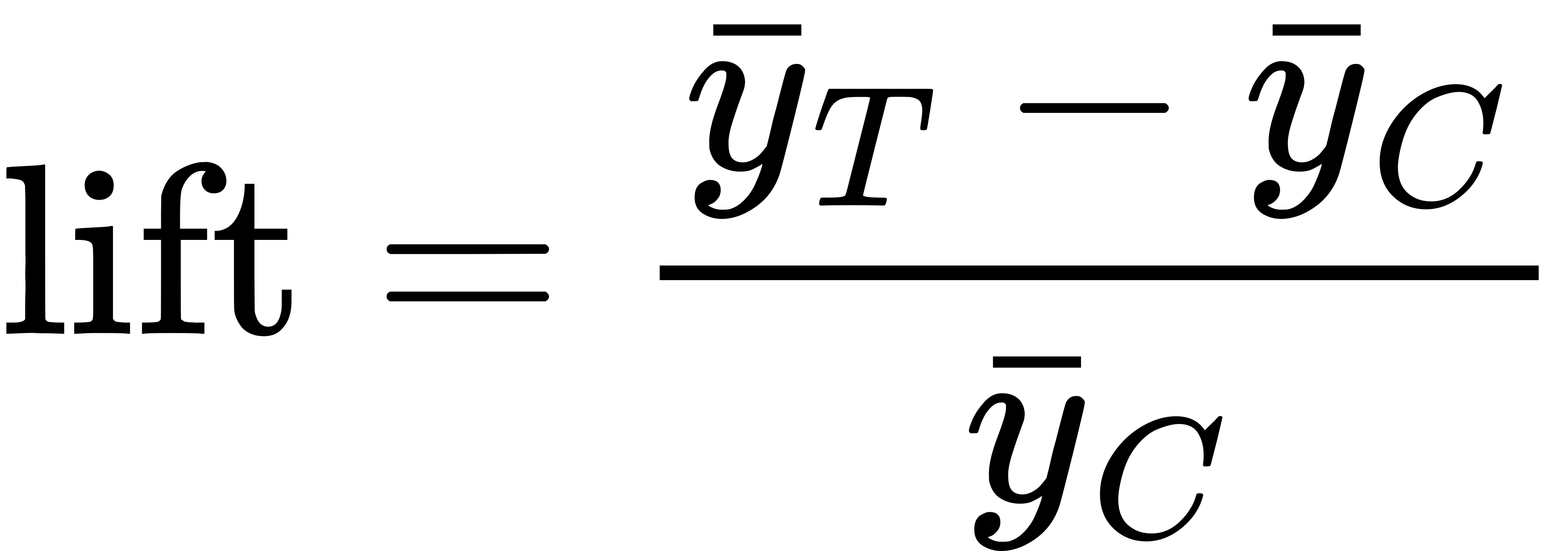
What the ads caused, measured against a holdout group, not what they touched.

Options scored against weighted criteria, so trade-offs are explicit.

How much it is worth paying to remove uncertainty before deciding.

On average, items in a steady system equal the arrival rate times the average time each spends inside. Queues, pipelines, backlogs.
Two lines under most of what is called AI in marketing.

The value of a decision includes the value of the decisions it leads to.

How a transformer weighs each word against every other. The core step in most large language models.
Try the method
Your conversion rate went up. Is that enough evidence to change the budget? The example is a landing page test most dashboards would call a win, up by half. Run the numbers and there is about an 80 percent chance it is real, which is not enough to act on. Put your own numbers in.
Each version gets a curve of plausible true rates, a Beta distribution, from its visitors and conversions. The tool draws from both curves twenty thousand times and counts how often the after version wins. It runs in your browser and nothing is sent anywhere. Formulas it rests on.
The longer version, with the thinking behind each one:
Why there are equations on a marketing websiteSources worth reading. David Sumpter, The Ten Equations That Rule the World. Evan Miller, Formulas for Bayesian A/B Testing, which the test tool above rests on. Evan Miller, How Not To Run an A/B Test, on why peeking at a running test misleads.
Next step
Tell us what you are trying to decide. We will tell you which method fits and what evidence it needs.